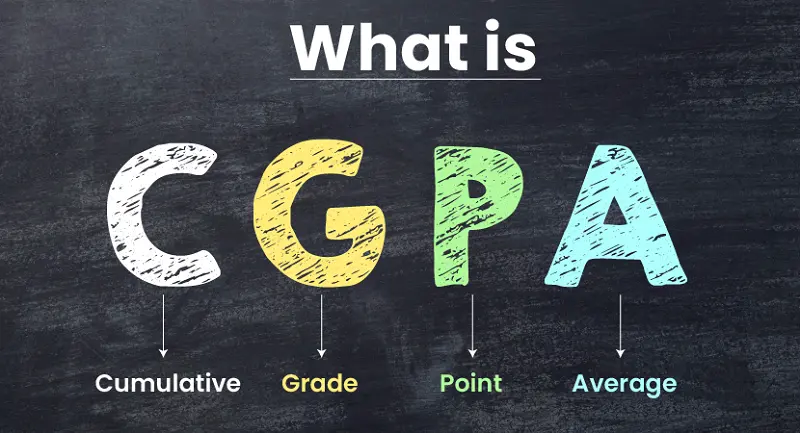
Ever wondered what that “CGPA” on your transcript really means, especially when you’re looking at opportunities both here in Pakistan and abroad? It’s a term thrown around a lot, but its significance and how it’s calculated can actuaally be quite different depending on where you’re studying. At its heart, CGPA stands for Cumulative Grade Point Average, and it’s basically your academic report card distilled into a single number. It embodies your overall performance throughout your entire degree, unlike a simple GPA (Grade Point Average) which might just cover one semester. It’s like your academic batting average, constantly updated with every new course you tackle.

What EXACTLY is CGPA, Anyway?
Think of your CGPA (Cumulative Grade Point Average) as a running total of all your grades, weighted by how much each course was worth. It’s not just about acing one tough exam; it’s about consistent effort across all your subjects, from day one right up to graduation. This cumulative aspect is what makes it so powerful – it shows your consistency and long-term academic commitment, which is why understanding what CGPA stands for is essential for students aiming for success at home or abroad.
CGPA in Pakistan: Usually a 4.0 Affair
Here in Pakistan, most universities and colleges use a 4.0 scale for CGPA. That means 4.0 is the highest you can get, representing outstanding performance. It works by assigning points to your letter grades (like A, B, C) and then factoring in how many credit hours each course was worth.
Here’s a simplified breakdown of how it generally works:
· Grade Points: Each letter grade you earn gets a numerical value. An ‘A’ might be 4.0, a ‘B’ could be 3.0, and so on. (These can vary slightly by university, so always check your institution’s specific policy!).
· Credit Hours: Every course has a certain number of credit hours, which essentially reflects its workload. A 3-credit hour course is typically more intensive than a 1-credit hour one.
· Quality Points: For each course, you multiply the grade point by the credit hours. These are your “quality points.”
· Semester GPA (SGPA): At the end of a semester, you add up all your quality points and divide by the total credit hours for that semester. That gives you your SGPA or otherwise known as just GPA.
· Cumulative CGPA: To get your grand total CGPA, you sum up all the quality points from all your semesters and divide by the total credit hours you’ve attempted throughout your entire degree program.

A Few Insider Tips for the Pakistani System:
· Consistency makes The King: Because it’s a cumulative average, a shaky start or a rough semester can really pull your CGPA down. It pays to be consistent from the very beginning.
· Minimum Thresholds: Most universities have minimum CGPA requirements. If you fall below a certain point, you might face academic probation or even not be able to graduate. An average minimum threshold can be at least a 2.50 out of 4.00, it may vary for individual universities.
· Honours & Medals: Get a high CGPA, and you’re likely to be on the Dean’s or Chancellor’s List, or even achieve a gold medal at graduation. It’s how your hard work gets officially recognized.
· Percentage Conversion: While CGPA is the official metric, you’ll often hear people talk about percentages. There’s a common (though approximate) conversion: Percentage = CGPA \times 9.5. Just remember, the CGPA is the universally accepted figure within the system.
· Job Market & Scholarships: A strong CGPA is a golden ticket for scholarships and often the first thing employers look at for entry-level jobs here. It’s your first impression in the professional world show casing not only your academic knowledge but also valuable traits like consistency and hard work.

The International CGPA Scene: It’s a Mixed Bag!
When you step onto the global stage, CGPA stands for Cumulative Grade Point Average (or often just “GPA,” which usually means cumulative in this context) and still measures overall academic performance. The big difference? The scale itself can be wildly different.
Here’s a quick tour of common international scales:
· The Familiar 4.0 Scale (USA, Canada): Many North American universities also use a 4.0 scale, very similar to ours. So, your 3.5 CGPA from Pakistan will likely be recognizable there.
· The 10.0 Scale (India, Parts of Europe): Head to India or some European countries, and you might encounter a 10.0 CGPA scale. This allows for finer distinctions in grades.
· Letter Grades/Classifications (UK, Australia): In the UK and Australia, you often won’t see a numerical CGPA on your final transcript. Instead, degrees are classified (e.g., First Class Honours, Upper Second Class). While universities might calculate an internal GPA, the public-facing result is typically a classification.
· Direct Percentages (Germany, Other European Countries): Some places might just use percentages as their primary grading system, or have their own unique numerical scales.

Key Things to Know About International CGPA:
· The Conversion Headache: This is probably the trickiest part. There’s no single “magic formula” to convert your Pakistani CGPA to, say, a German or British equivalent. Universities abroad often have their own specific conversion charts, or they might ask for an official evaluation of your transcript by a third-party service. This can be a detailed process, so be prepared!
· Context Matters: International admissions committees know that grading systems vary. They don’t just look at the raw number. They consider where you studied, how challenging your courses were, and your overall academic profile – did you do research? Were you involved in extracurriculars?
· Weighted GPAs: Some international systems, especially in the US, might use “weighted GPAs.” This means that more challenging or advanced courses (like honors classes) might get a higher weight, rewarding students who took on tougher academic loads.
· “Good” is Relative: What’s considered an excellent CGPA in one country might just be average in another. For example, an 8.0 on a 10.0 scale in India is generally very good, and it would translate to a strong GPA on a 4.0 scale. Always research what’s considered competitive for the programs you’re interested in.
· Its Not Just the Number: While your CGPA is extremely important, international applications are increasingly holistic. A killer personal statement, glowing letters of recommendation, solid standardized test scores (like the GRE or GMAT), and any research or work experience can significantly boost your application, even if your CGPA (which stands for Cumulative Grade Point Average) isn’t absolutely top-tier. Understanding what CGPA stands for and how it fits into the bigger picture is key to presenting yourself as a well-rounded, competitive candidate.

Why Does CGPA Matter So Much?
Whether you’re staying in Pakistan or dreaming of studies abroad, your CGPA is a crucial metric. It’s:
· Your Entry Ticket: For higher education, especially graduate school, your CGPA is often the first thing they’ll look upon.
· Key for Scholarships: Many scholarships and financial aid opportunities depend heavily on a strong academic record, and your CGPA is the clearest proof of that.
· An Employer’s First Look: In the job market, especially for fresh graduates, your CGPA is often the first thing recruiters scan to gauge your intellectual capability and dedication.
· A Testament to Your Learning: Beyond just a number, a good CGPA shows that you can understand complex ideas, manage your time, and commit to your studies – all essential skills for life.
So, while the term CGPA stands for Cumulative Grade Point Average and is universal, its practical application and the scale it uses can differ. Understanding these details, especially when you’re thinking about opportunities beyond Pakistan, is really important. Ultimately, a strong CGPA, combined with a well-rounded set of experiences, is your best bet for opening doors, no matter where in the world you choose to go.
For More Details: https://www.uniguidepk.com/us-visa-application/