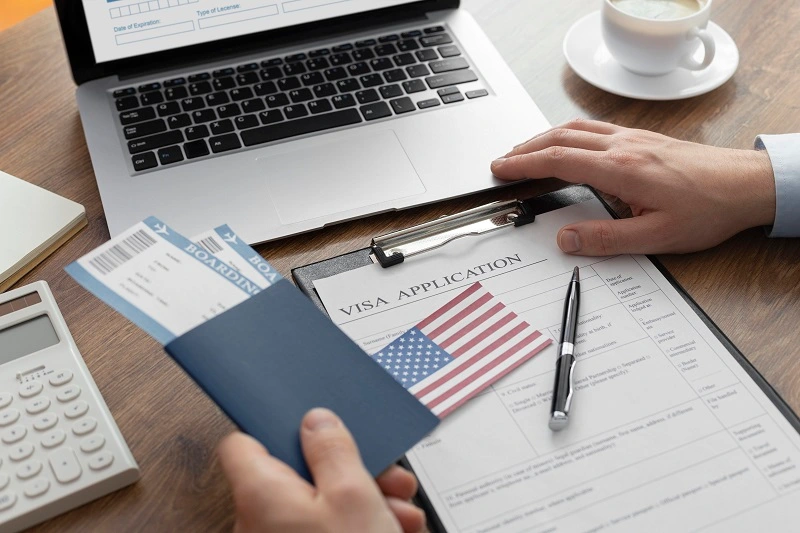
The United States remains a top destination for travelers, students, and professionals worldwide. However, for anyone dreaming of stepping onto American soil, the journey often begins with navigating the intricate process of the US visa application. These application procedures are not static; they evolve, sometimes rapidly, in response to global events, legislative changes, and administrative priorities. Understanding the latest updates and requirements is crucial to ensuring a smooth and successful visa experience.
For aspiring visa applicants in Pakistan and around the globe, staying informed is not just a recommendation, it’s a necessity. Relying on outdated information can lead to frustrating delays, costly errors, or even visa denials.
This blog post is designed to equip you with the knowledge and resources to reliably access the most current US Visa Application Rules. We’ll also highlight some significant changes and trends that have been observed or announced as of July 2025.
Why US Visa Rules Are Always Changing
The dynamic nature of US immigration policy can be attributed to several factors:
Legislative Amendments:
New laws passed by the U.S. Congress can introduce entirely new visa categories or alter existing ones.
Executive Orders:
The President of the United States can issue executive orders that impact immigration policies and procedures.
Regulatory Updates:
Agencies like the Department of State (DOS) and U.S. Citizenship and Immigration Services (USCIS) regularly update their regulations to implement new laws or streamline processes.
Global Events:
Geopolitical shifts, health crises (like the recent pandemic), and security concerns can all lead to rapid adjustments in visa processing and requirements.
Economic Conditions:
Changes in the US economy can influence policies related to work visas and labor needs.
Understanding this fluidity underscores why relying solely on anecdotal evidence or old information is risky.
Your Official Compass:
Where to Find Reliable US Visa Information? To ensure you are working with the most accurate and up-to-date information, always prioritize these official US government sources:
U.S. Department of State (Travel.State.Gov):
This is your primary resource for all non-immigrant (temporary) visas, including tourist (B1/B2), student (F/M), exchange visitor (J), and various work visas (H, L, O, P, Q, R).
What to look for:
Visa Wizard: An excellent starting point to help determine the correct visa type for your purpose of travel.
Visa Categories:
In-depth details on each visa type, including eligibility, required documents, and application steps.
Newsroom/Alerts:
Critical announcements regarding policy changes, fee updates, and service disruptions. This section is vital for real-time updates.
Reciprocity and Civil Documents by Country:
Provides country-specific information on visa validity, fees, and required civil documents.
US Embassy/Consulate Websites:
Crucially, always visit the website of the specific U.S. Embassy or Consulate in your country of residence (e.g., pk.usembassy.gov for Pakistan). These sites provide localized instructions, current interview wait times, and country-specific alerts. Wait times can vary dramatically by location!
U.S. Citizenship and Immigration Services (USCIS.gov):
This agency handles immigrant (permanent) visas, green cards, and certain petitions filed by US employers or relatives.
What to look for?
Newsroom/Alerts:
Important updates on policy changes, fee adjustments, and processing for immigrant petitions and applications for adjustment of status.
Policy Manual:
Detailed, publicly available guidance on various immigration laws and policies.
Visa Availability and Priority Dates (Visa Bulletin): USCIS, in conjunction with the Department of State, publishes this monthly bulletin. It’s essential for family-sponsored and employment-based immigrant visa applicants to track when their priority date becomes current and they can apply for a visa.
Forms and Fees:
Access to all official immigration forms and their associated fees.
U.S. Customs and Border Protection (CBP.gov):
While not directly involved in visa issuance, CBP is the agency responsible for screening and admitting individuals at US ports of entry. Their website provides information on entry requirements, what to expect upon arrival, and regulations for visitors.
USTravelDocs.com (for many countries):
For many countries, including Pakistan, this third-party website is the official platform used for scheduling non-immigrant visa interviews, paying fees, and tracking passport delivery. Ensure you select your specific country to access the correct information.
Key Visa Policy Updates and Trends in 2025
As of July 2025, here are some notable updates and ongoing trends that visa applicants should be aware of:
B-1/B-2 Visa “Integrity Fee” Implemented (FY 2025):
A significant new development is the implementation of a $250 “visa integrity fee” for most B-1/B-2 (tourist/business) visa applicants. This fee is in addition to the standard application fee ($185 as of June 2023) and primarily impacts travelers from countries not part of the Visa Waiver Program. It’s crucial to factor this into your budget. While the fee is theoretically refundable upon full compliance with visa terms, the process for obtaining such a refund is still evolving. This fee applies to nearly all nonimmigrant visas, including F-1, H-1B, L-1, O-1, and TN, as part of the “One Big Beautiful Bill Act” signed in July 2025.
Revised Visa Interview Waiver Policy (Effective February 2025):
The Department of State revised its interview waiver policy. The eligibility period for nonimmigrant visa renewal interview waivers has been reduced from 48 months to the statutory 12-month limit. This means applicants renewing a visa must have had their previous visa expire within 12 months (instead of 48 months) to potentially qualify for a waiver. Furthermore, the discretionary waiver that previously allowed some first-time nonimmigrant visa applicants (excluding B visa holders) to bypass interviews if they held a visa within the past 48 months has been revoked. This change is likely to increase the number of applicants requiring in-person interviews, potentially impacting wait times.
Social Media Vetting for F, M, J Visas (Effective June 2025):
A new policy, effective June 18, 2025, now requires individuals applying for F (student), M (vocational student), and J (exchange visitor) nonimmigrant visas to adjust the privacy settings on all of their social media accounts to “public.” This allows consular officers to conduct a “comprehensive and thorough vetting” of applicants’ online presence, looking for “hostile attitudes toward our citizens, culture, government, institutions, or founding principles.” Refusal to make accounts public could be viewed as an attempt to hide activity and may lead to visa denial. This is a significant shift for students and exchange visitors.
H-1B Visa Lottery Changes Proposed (H-1B FY2026 Season and beyond):
While the H-1B lottery for FY2025 has concluded, proposed changes for future years (starting with FY2026) aim to prioritize visa allocations based on wage levels, moving away from a purely random lottery. The new plan will likely prioritize higher-salaried positions (Level IV, then III, II, and I) based on Occupational Employment Statistics (OES) wage data. This is a crucial development for high-skilled workers and employers.
Temporary Increase in H-2B Visas (FY 2025): For Fiscal Year 2025, the Department of Homeland Security (DHS) and Department of Labor (DOL) jointly announced a temporary increase of up to 64,716 additional H-2B nonimmigrant visas (for non-agricultural temporary workers) to address employer demand. This shows responsiveness to specific labor market needs.
DS-160 Confirmation Number Matching Policy (Effective May 2025, globally)
Starting May 1, 2025, nonimmigrant visa applicants globally must present an online nonimmigrant visa application (DS-160) confirmation number that exactly matches the application number used to schedule their appointment. If the numbers do not match upon arrival for the interview, applicants will likely have to reschedule and may incur new visa fees. This is particularly important for applicants whose appointments were booked by third parties (like travel agencies).
COVID-19 Vaccine Requirement Eased for Immigrant Visas (Effective January 2025)
As of January 22, 2025, the Centers for Disease Control and Prevention (CDC) no longer requires immigrant visa applicants to receive a COVID-19 vaccine dose as part of their immigration medical examination. This change simplifies the medical requirements for those seeking permanent residency, although other standard vaccinations remain mandatory.
Variable Consular Wait Times
While efforts are continually made to reduce backlogs from the pandemic era, wait times for visa interviews continue to vary significantly by country and even by visa category. Always check the specific embassy or consulate website for the most current information. For applicants in Pakistan, consistently monitor the US Embassy & Consulates in Pakistan website for localized updates.
Essential Tips for a Successful Application
Beyond understanding the rules, here are some timeless tips for navigating the US visa application process:
Start Early:
Visa processing can be lengthy. Begin your application well in advance of your intended travel date.
Accuracy is Key:
Meticulously complete all forms, especially the DS-160. Any inaccuracies or omissions can lead to delays or denials.
Gather All Documents:
Prepare all required supporting documents as specified by the embassy/consulate. Missing paperwork is a common reason for application issues.
Be Truthful:
Always provide honest and complete information. Misrepresentation can result in permanent ineligibility for a US visa.
Understand Your Visa Type:
Ensure the visa you apply for precisely matches your purpose of travel. Misrepresenting your intent can have severe consequences.
Prepare for Your Interview:
If an interview is required, be ready to clearly articulate your purpose of travel, your ties to your home country (demonstrating your intent to return), and how you will financially support your stay.
Beware of Scams:
Only use official government websites and recognized service providers. Be wary of anyone promising guaranteed visa approvals or asking for exorbitant fees beyond the official government charges.
Do Not Book Irrevocable Travel:
Avoid purchasing non-refundable airline tickets or making irreversible travel plans until your visa has been issued.
Conclusion
The US visa application process, while designed to be thorough, requires diligence and attention to detail from the applicant. With policies continuously evolving, your best strategy is to become your own advocate for information. By regularly checking the official US government websites and the specific embassy/consulate in your region, you can empower yourself with the most current and accurate guidance, significantly improving your chances of a smooth and successful visa application journey to the United States.
Note: This article is for informational purposes only and does not constitute legal advice. US visa policies are complex and subject to change without notice. Always consult official government websites or a qualified immigration attorney for personalized guidance.
For More Details: https://www.uniguidepk.com/university-of-hull/