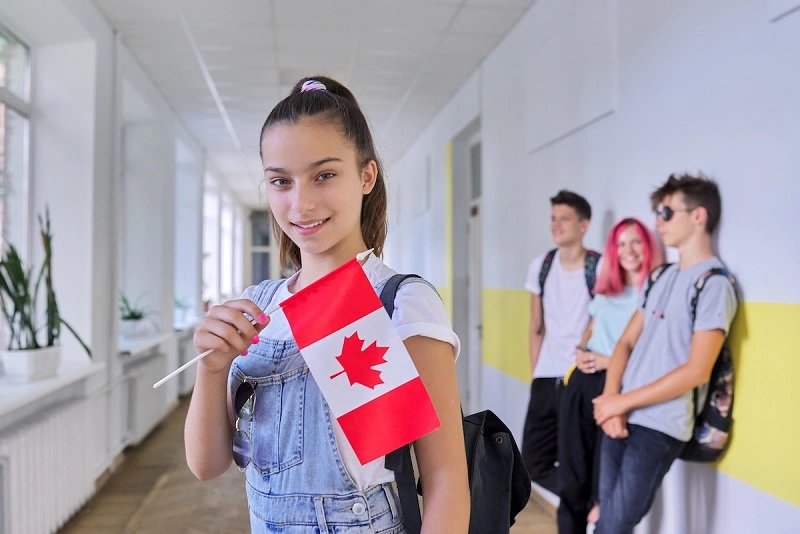
Navigating the path to international education can feel like a daunting task, especially when you’re a student from Pakistan aiming to study in Canada after 10th from Pakistan. The dream of studying in a country known for its high-quality education, diverse culture, and stunning landscapes is a powerful one. But what does it take to turn that dream into a reality, particularly after completing your 10th grade? Let’s break down the requirements and the process in a way that’s clear and easy to follow.

The Educational Path after 10th Grade
In Pakistan, completing your 10th grade (Matriculation) is a significant milestone. In Canada, this corresponds to completing Grade 10. To continue your studies in Canada, you generally have a few options:
· High School (Grades 11 and 12):
This is a popular route. You can enroll in a Canadian high school to complete your final two years of secondary education. This option allows you to immerse yourself in the Canadian education system, prepare for a Canadian university, and become fluent in English.
· Diploma or Certificate Programs:
Some institutions, particularly colleges, may offer diploma or certificate programs that are accessible after Grade 10. These programs are often more vocational and career-focused, providing hands-on training.
· Foundation or Bridging Programs:
These programs are designed to help international students meet the academic and English language requirements for a full degree program. They act as a stepping stone to a college or university.

Key Requirements to Keep in Mind
Regardless of the path you choose, there are several fundamental requirements you’ll need to meet. It’s crucial to be meticulous and organized with your application.
1. Academic Requirements
Your academic record from Pakistan is the first thing Canadian institutions will look at.
· Transcripts:
You’ll need to provide certified copies of your 10th-grade transcripts and a school leaving certificate. Your marks will be evaluated against the Canadian grading system.
· Minimum Grades:
While specific requirements vary by institution, many schools and programs look for a good academic standing. Aim for a high percentage in your Matriculation exams, especially in subjects relevant to your desired field of study.
2. English Language Proficiency
As a student from a non-native English-speaking country, you must demonstrate your proficiency in the language.
· IELTS/TOEFL:
When planning to study in Canada after 10th from Pakistan, the most common way to prove your English skills is by taking a standardized test like the International English Language Testing System (IELTS) or the Test of English as a Foreign Language (TOEFL). The required scores can vary, so always check the specific requirements of the school you’re applying to.
· Alternative Options:
Some institutions may waive the English language test requirement if you’ve completed your education in an English-medium school for a certain number of years. However, having a good IELTS or TOEFL score is always a huge advantage.

3. Letter of Acceptance (LOA)
This is the cornerstone of your study permit application.
· Designated Learning Institution (DLI):
To study in Canada after 10th from Pakistan, you must be accepted into a program at a Designated Learning Institution (DLI). DLIs are schools approved by provincial and territorial governments to host international students. Make sure the institution you choose is on this official list to ensure your study permit application is valid.
· Application Process:
The process involves researching schools, submitting an application with all your academic documents and test scores, and waiting for an acceptance letter.
4. Proof of Financial Support
Canada wants to ensure that you can financially support yourself during your studies.
· Tuition and Living Expenses:
You will need to show that you have enough funds to cover your first year’s tuition fees and living expenses. This is often demonstrated through bank statements, proof of scholarships, or a Guaranteed Investment Certificate (GIC).
· GIC:
The GIC is a popular option where you deposit a specific amount of money into a Canadian bank account, which is then released to you in installments. This serves as proof that you have the funds for your living expenses.

5. Study Permit (Student Visa)
This is the official document that allows you to study in Canada.
· Application:
Once you have your Letter of Acceptance and proof of funds, you can apply for a study permit. The application can be done online through the Immigration, Refugees and Citizenship Canada (IRCC) website.
· Documents:
The application requires a variety of documents, including your LOA, proof of identity (passport), and proof of financial support.
· Biometrics and Medical Exam:
You will likely be required to provide biometrics (fingerprints and photos) and undergo a medical examination with an IRCC-approved panel physician.
· Statement of Purpose (SOP):
As part of your journey to study in Canada after 10th from Pakistan, this is a critical part of your application. You’ll need to write a compelling essay explaining your academic goals, why you chose Canada and your specific program, and how your studies will benefit your future career plans.
6. Custodian Declaration (for Minors)
If you are under 18, you are considered a minor in Canada.
· Guardian:
In most cases, you will need a custodian in Canada, who is a Canadian citizen or permanent resident, to act as your guardian. This person is responsible for your well-being.
· Custodian Declaration Form:
Both your parents in Pakistan and the custodian in Canada will need to sign a Custodian Declaration form, which is a legally binding document.

The Final Takeaway
Studying in Canada after your 10th grade is an achievable goal, especially for those who wish to study in Canada after 10th from Pakistan, but it requires thorough planning and attention to detail. Start your research early, gather all your documents, and be prepared to present a strong case for why you should be granted a study permit. It’s a journey that starts with a single step, and with the right preparation, that step can lead you to a world-class education and an unforgettable experience in Canada.
For More Information: https://www.uniguidepk.com/cgpa-stands-for/