Finland, consistently ranked among the world’s leaders in education and innovation, offers a wealth of opportunities for international students seeking high-quality, English-taught degree programs. While the application process is streamlined through the centralized Studyinfo.fi portal, prospective students must meticulously prepare for the specific entry requirements, application deadlines, and financial commitments. For those searching for a Finland without IELTS university, this guide provides a detailed breakdown of the admission process for non-EU/EEA applicants, including alternative ways to meet language requirements.

1. English Proficiency: Alternative Entry Requirements
For many international applicants, the assumption is that an IELTS or TOEFL certificate is mandatory. However, numerous Finnish universities and Universities of Applied Sciences (UAS) offer alternative methods to demonstrate the required level of English proficiency. These alternatives allow students to pursue an excellent education in Finland without the need for a standardized English language test score.
Common Exemptions and Alternatives:
| Previous Studies in English | A Medium of Instruction (MOI) letter from a previous educational institution (high school or university) confirming that the entire program was taught and assessed in English. This is a very common exemption. |
| University Entrance Examinations | Many UAS institutions use their own Entrance Exams (e.g., the International UAS Exam) which include a mandatory English language section. A successful score on this integrated test fulfills the language requirement. |
| Other Standardized Tests | Acceptance of alternative tests like the Duolingo English Test (DET) or PTE Academic is growing, particularly among Universities of Applied Sciences. |
| Specific High School Grades | Achieving a high grade in English on a recognized international or national high school leaving certificate, such as the International Baccalaureate (IB) diploma or certain national matriculation examinations. |
Applicants are strongly advised to check the specific requirements on the official program description on Studyinfo.fi, as requirements can vary significantly between institutions and programs.

2. Fee Structure and Financial Obligations
Education in Finland is generally free for citizens of the EU/EEA and Switzerland. However, non-EU/EEA students pursuing Bachelor’s or Master’s degrees taught in English are required to pay tuition fees. Doctoral (PhD) programs are typically tuition-free regardless of nationality.
Tuition Fee Range (Per Academic Year):
- Universities of Applied Sciences (UAS):
Generally range from €8,000 to €12,000 per year.
- Traditional Universities (e.g., University of Helsinki, Aalto University):
Generally range from €10,000 to €18,000 per year, depending on the field of study.
Scholarships and Waivers:
Finnish higher education institutions are legally mandated to offer scholarship schemes to non-EU/EEA students. These scholarships are merit-based and can significantly reduce the cost of study:
- Partial Waivers:
Cover 30% to 50% of the annual tuition fee.
- Full Waivers:
Cover 100% of the tuition fee.
- Some institutions may offer additional scholarships that include a stipend for living expenses in the first year.
Living Expenses and Financial Proof (Residence Permit):
Beyond tuition, students must prove sufficient funds for living expenses to the Finnish Immigration Service (Migri) when applying for the student residence permit.
| Expense Category | Minimum Requirement (Migri) | Recommended Monthly Budget |
| Monthly Living Costs | €800 per month | €900 – €1,200 (including rent, food, transport) |
| Annual Financial Proof | €9,600 (for programs 1 year or longer) | Proof must be held in the student’s personal bank account. |
| Health Insurance | Mandatory for the duration of the permit. | Cost varies, but is a required upfront payment. |
Note: If the tuition fee has not yet been paid at the time of the residence permit application, the funds for the first year’s tuition must also be visible in the bank account, in addition to the €9,600 living expense proof.

3. Application Deadlines and Timeline
Finnish universities primarily use a centralized system called Studyinfo.fi for applications. The academic year generally begins in August/September (Autumn Intake), with a secondary, smaller intake in January (Spring Intake) for select programs. If you’re targeting a Finland without IELTS university, you can still apply through this portal by selecting institutions that accept alternative English proficiency methods.
Key Application Periods (Approximate Dates for 2025/2026):
| Application Round | Programs Offered | Application Window | Results Published |
| Main Joint Application (Autumn Intake) | Most Bachelor’s & Master’s degrees in English. | Early/Mid-January (e.g., Jan 8 – Jan 22) | Late May/Early June |
| Secondary Joint Application (Spring Intake) | Limited programs, mostly Finnish/Swedish taught. | Early September (e.g., Sept 1 – Sept 11) | Mid-November |
| Separate Applications | Doctoral programs or select Master’s degrees. | Varies by university/program. Check specific university websites. | Varies |
Important Dates to Note:
- Application Fee:
Non-EU/EEA applicants must pay a non-refundable application fee of €100 (effective January 2025).
- Tuition Payment:
The first year’s tuition fee or deposit is typically due by late June/early July to secure the study place.
- Residence Permit Application:
Must be submitted immediately after accepting the study place and paying the tuition fee, as processing times can vary.

4. Required Documents for University Admission
All application documents must be submitted electronically to the Studyinfo.fi portal, and original, officially certified copies must be sent to University Admissions Finland (UAF) or the specific university by a set deadline.
General Required Documents:
- Academic Transcripts and Certificates:
Officially certified copies of your final Bachelor’s/Master’s degree certificate (for Master’s applicants) or high school leaving certificate (for Bachelor’s applicants), along with academic transcripts for all years of study, are required. If you’re applying to a Finland without IELTS university, be prepared to submit additional documents proving your English proficiency through alternative means.
- Proof of Language Skills:
Documentation that fulfills the English proficiency requirement (e.g., MOI letter, Duolingo score, or proof of registration for the university’s entrance exam).
- Passport Copy:
A clear copy of your valid passport’s personal data page.
- Curriculum Vitae (CV):
A structured CV, usually in the Europass format, detailing your educational and work history.
- Letter of Motivation/Statement of Purpose (SOP):
An essay explaining why you want to study the specific program, your future goals, and why you chose Finland.
- Letters of Recommendation (LOR):
Typically required for Master’s programs, from previous professors or employers.
- Portfolio/Specific Essays:
Required for programs in arts, design, and architecture.

5. Entry and Eligibility Requirements
Admission is a two-step process: checking general eligibility and meeting program-specific criteria.
General Eligibility:
| Degree Level | Eligibility Requirement |
| Bachelor’s Degree | Completion of a secondary education that grants general eligibility for higher education studies in the awarding country (e.g., high school diploma, A-Levels, or equivalent). |
| Master’s Degree | A completed Bachelor’s degree (or equivalent) in a relevant field, plus a certain minimum amount of studies in the subject of the Master’s program (e.g., 60 ECTS credits). |
Program-Specific Entry Methods:
Finnish universities use various methods to select students, which may include one or a combination of the following:
- Entrance Examinations:
Common for Universities of Applied Sciences (UAS). These exams assess aptitude, reasoning, and English skills.
- SAT/GMAT/GRE Scores:
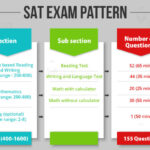
Some universities, particularly traditional research universities, may accept or require these scores for admission to Bachelor’s and Master’s programs.
- Academic Performance (GPA):
Selection based purely on the applicant’s previous academic success.
- Interviews and Portfolios:
Mandatory for specialized fields like art, design, and certain Master’s programs.

Successful applicants must meet all academic, language, and program-specific entry requirements to receive a final letter of acceptance, which is the crucial document for initiating the student residence permit application. Those applying to a Finland without IELTS university must ensure they provide alternative proof of English proficiency as accepted by the institution.
For More Information: https://www.uniguidepk.com/sweden-intakes-for-masters/